
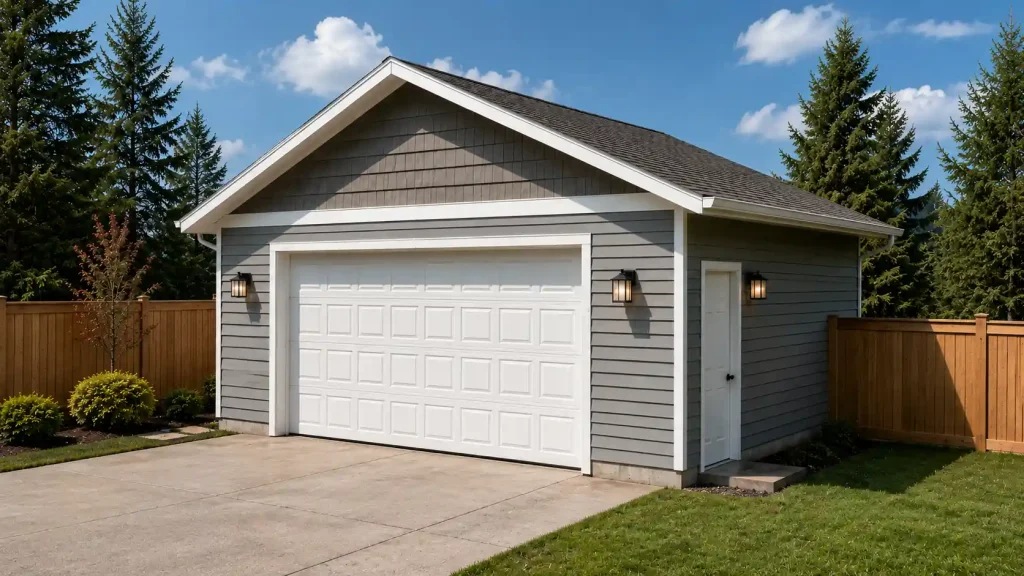
The garage is one of those decisions that feels straightforward until you are actually building. How many bays do you need? What about an RV, a workspace, storage, or an electric-vehicle charger?
For homeowners building on their own land in the Pacific Northwest, these questions deserve real answers before the floor plan is finalized, because getting the garage right from the start is far easier than trying to expand or reconfigure it after the fact.
Why Garage Planning Deserves Early Attention
The garage is one of the first decisions that directly affects your home’s footprint, its relationship to the lot, and how the finished home functions day-to-day. Yet it is often treated as an afterthought, something to figure out after the floor plan is locked in.
That approach creates problems. If attached, the garage influences driveway placement, entry points into the home, natural light on the main floor, and the exterior elevation as seen from the street. On rural and semi-rural lots common across the Pacific Northwest, you may want your garage to accommodate the equipment, vehicles, and storage that come with that lifestyle.
A standard two-car garage that works well in a suburban neighborhood may fall short on a property where you also need space for a truck with a trailer, a riding mower, a woodworking setup, or additional covered storage.
Starting the garage conversation early in the design process means these considerations get built in rather than bolted on.
Getting the Size Right
The garage size is more than enough for your vehicles. It is about how you actually use the space once the cars are parked.
In 2024, 65% of newly completed single-family homes had a two-car garage, while 15% had a garage for three or more cars, according to the U.S. Census Bureau Survey of Construction data. Those numbers reflect how central the garage has become to how families actually live, and they are a useful starting point for thinking about what you need.
A standard two-car garage is roughly 20 by 20 feet at minimum, but that leaves very little room to move around, fully open doors, or store anything along the walls. A more functional two-car garage is typically 24 by 24 feet or larger, which allows for wall storage, a workbench, and comfortable clearance on all sides.
Our simple garage plan is built around exactly that footprint, offering a clean, practical two-car solution that works well on a wide range of lot configurations.
For households with three vehicles, oversized trucks, or equipment that needs covered storage, a three-car or extended garage adds meaningful usability without dramatically increasing the build footprint. If you own or plan to own a recreational vehicle, our RV garage plan is built specifically for that use case, with the ceiling height and depth a full-size RV actually needs. For buyers who want workspace alongside vehicle storage, our garage with office and shop plan adds dedicated work and office space above or alongside the bays. The key is thinking through what you own now and what you are likely to own five to ten years from now, not just what fits today.
Ceiling height is another dimension worth thinking through early. Standard residential garage ceilings run around eight feet, which works for most passenger vehicles. If you plan to use a lift or store a taller truck, you need a taller door and higher ceiling clearance planned from the start, not added as a revision.
How the Garage Connects to the Home in the Pacific Northwest
Where the garage sits on the lot and how it connects to the house could affect daily life more than most buyers expect, and in the Pacific Northwest, that connection is heavily shaped by the climate.
The region sees sustained rainfall from October through May across Oregon and Washington. An attached garage with a direct entry into the home means you arrive, pull in, and walk inside without getting rained on. Over the course of a Pacific Northwest winter, that becomes one of the most appreciated features of the home.
That connection point also creates a natural opportunity for a mudroom, laundry room, or transition space between the garage and the main living area, a place to manage wet boots, coats, outdoor gear, and daily household tasks before they make it into the house. Planning for that space during the design phase costs far less than adding it later.
A detached garage offers greater placement flexibility and can work well on lots where the main home’s footprint does not leave room for an attached structure. It also keeps mechanical noise and vehicle or workshop fumes fully separated from the living space, which some households prefer.
For buyers who want the garage to serve as more than just vehicle storage, our garage-with-office-and-shop plan offers a purpose-built layout that includes dedicated workspace and office space alongside the garage bays. This is particularly well-suited to buyers in rural areas of Oregon and Washington who run a home-based business, work remotely, or need a dedicated shop for woodworking, fabrication, or mechanical work.
If living space above the garage is part of the picture, our garage with living space plans take that flexibility even further. These designs add finished living quarters above the bays, making them a practical option for multigenerational properties, guest accommodations, or rental income on a rural lot.
Must-Have Features to Plan For
A well-planned garage includes features that are far easier and less expensive to incorporate during the build than to add afterward.
Electrical capacity is at the top of that list. At a minimum, the garage should be wired for adequate outlets, good lighting, and a dedicated circuit for a compressor or power tools. If you drive or plan to drive an electric vehicle, roughing in a 240-volt circuit for an EV charger during construction adds minimal cost and avoids a more expensive retrofit later.
Oregon and Washington consistently rank among the top states in the country for EV adoption, and planning for a charger from the start is increasingly a standard consideration for Pacific Northwest buyers rather than an optional upgrade.
Insulation and moisture management deserve particular attention in this region. The Pacific Northwest’s damp climate means an uninsulated garage can work against you, trapping moisture that can damage stored items, damage finishes, and make any workspace uncomfortable. When you build an attached garage with True Built Home, insulation and drywall are included as standard.
Adding a vapor barrier and a sealed floor gives you a garage that performs well through the region’s wet seasons and the flexibility to condition the space in the future without tearing into finished surfaces.
Overhead storage, wall-mounted shelving systems, and utility sinks are all much easier to accommodate when the framing and plumbing rough-in are planned in advance. These are not expensive additions during a build, but they can be costly to retrofit once the walls are finished and the slab is poured.
How Pacific Northwest Lot Conditions Shape Your Garage Decision
Lots across the Pacific Northwest vary considerably depending on where you are building, and those differences directly affect where your garage can sit and how it needs to be designed.
In western Oregon and Washington, sloped terrain is common on rural parcels. A sloped lot requires decisions about whether the garage sits at grade, partially below grade, or elevated relative to the home. Each approach affects your driveway approach angle, door clearance, and how water moves around the structure during heavy rain.
Getting the garage orientation and drainage right on a sloped Pacific Northwest lot is not just a design consideration; it is a practical one that shapes how well the structure holds up over time.
Clay-heavy soils across much of the region drain slowly, which means water can pool around a garage slab if grading is not carefully planned. Proper slope away from the structure and attention to drainage during site prep are particularly important here, more so than on sandier or better-draining soils found in other parts of the country.
Rural parcels in the Pacific Northwest often come with irregular shapes, existing tree cover, or setback requirements from roads, property lines, or waterways. These constraints influence where the garage can realistically sit relative to the home and may affect whether an attached or detached configuration makes more sense for your specific piece of land.
Working through those site conditions early, as part of the design conversation rather than after the floor plan is set, is one of the most valuable things you can do before committing to a garage plan.
Building Your Custom Home Garage in the Pacific Northwest
True Built Home has been building custom homes and garages on privately owned land across Washington and Western Oregon since 2008, and our team understands how lot conditions, lifestyle needs, and the region’s climate shape the right garage decision.
Whether you need a simple two-car solution, one with a workspace and office alongside the bays, or a home plan that includes a garage with living space above, whether as an ADU or as part of the main home, we offer a range of garage plans built as part of your new home construction. We do not build standalone garages separately, so if you are planning a new home build with us, this is the right time to get your garage right from the start. Reach out when you are ready, and we will walk you through your options.
If you are planning a custom home build and want to make sure your garage works as hard as the rest of your home, get your free consultation and let our team help you find the right plan for your land.